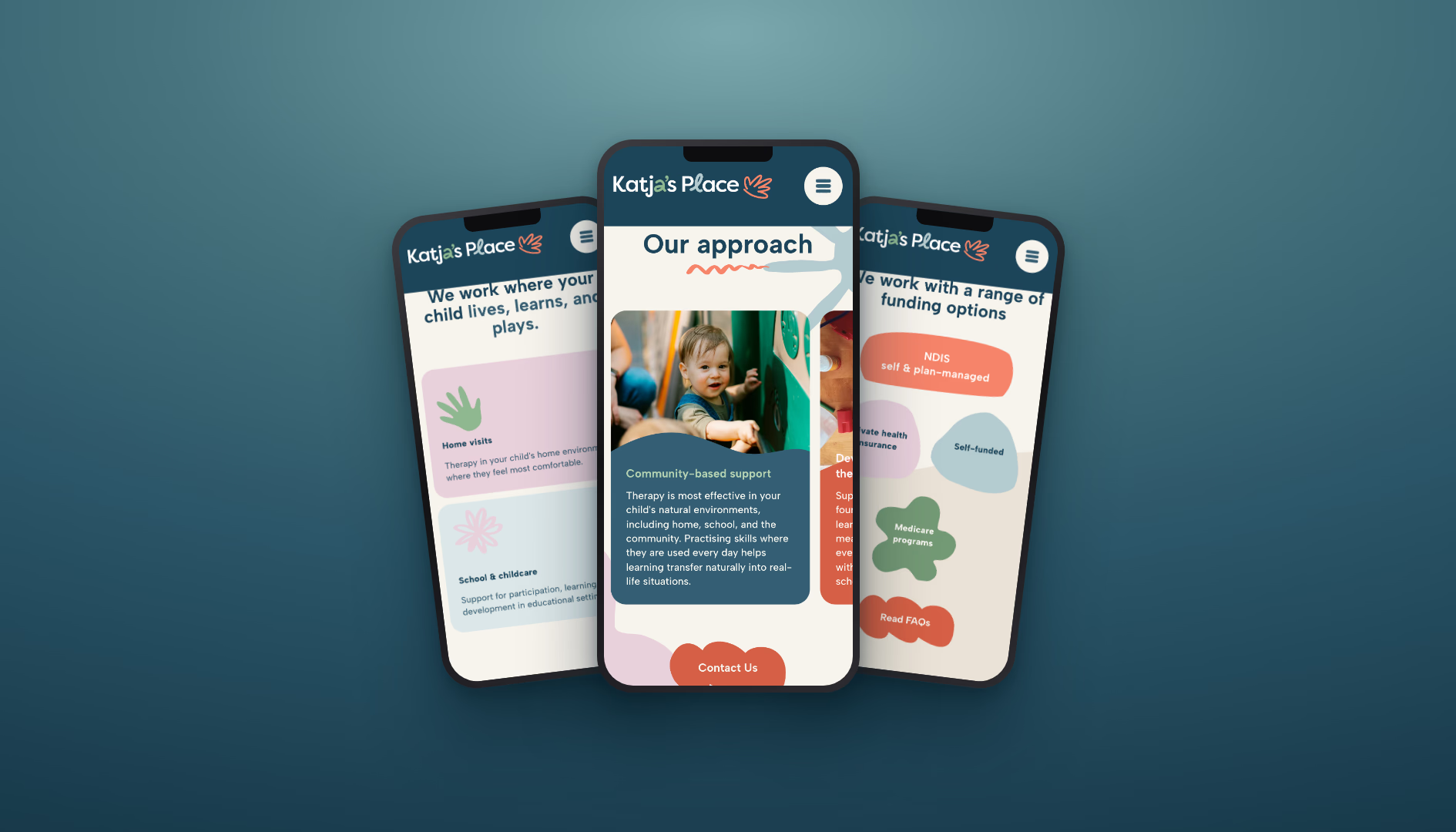
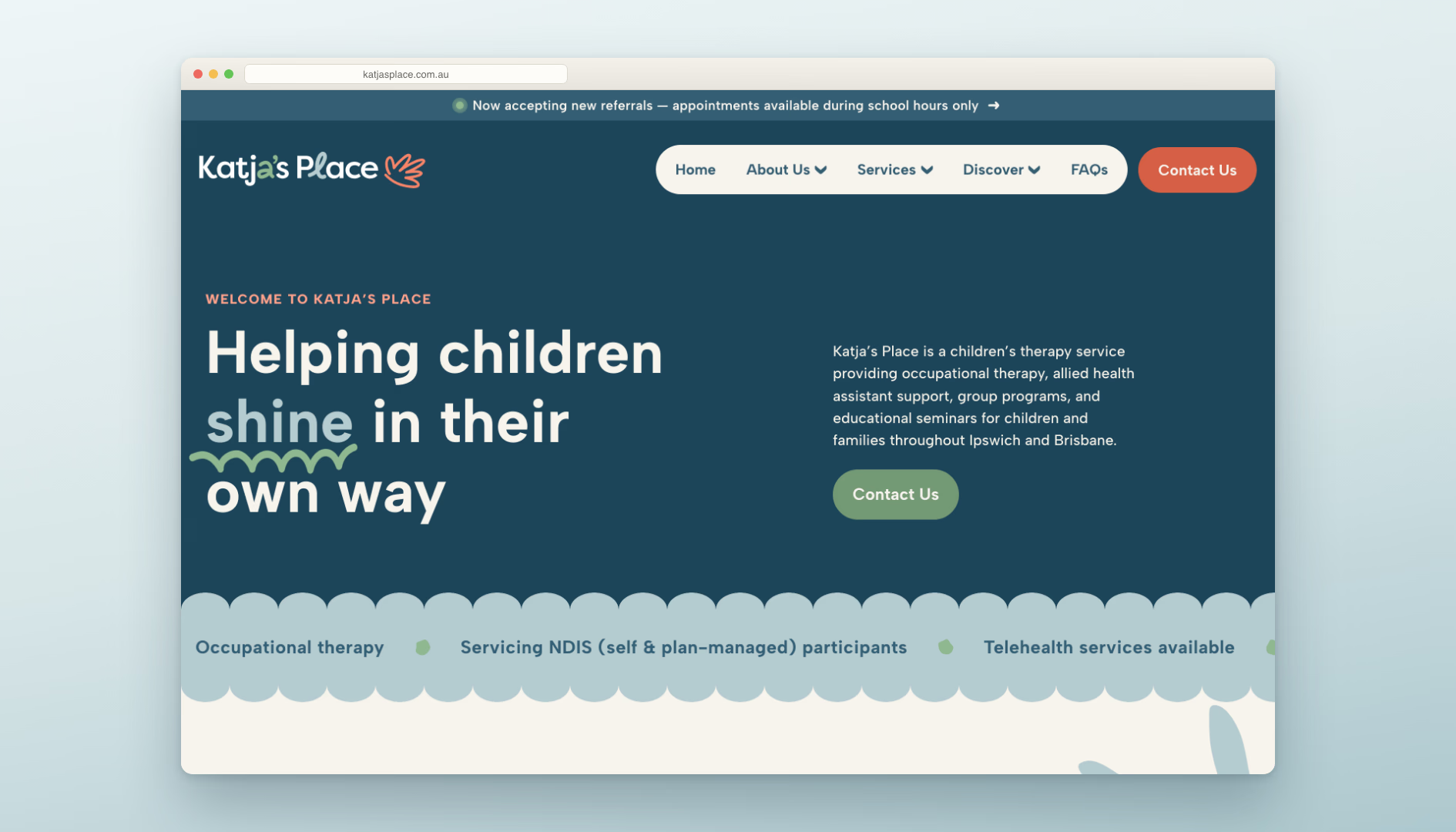
A website and CMS for a children's occupational therapy practice across Ipswich and Brisbane, built so a small clinical team can keep services, group programs and seminars current between sessions.
View live →The Challenge
Parents arrive at a therapy website worried. Their child has been referred, or they have noticed something themselves, and they are trying to work out what occupational therapy actually is and whether they can afford it.
Katja's Place had a lot to explain. Six distinct services. Therapy that happens at home, at school, in the community and over telehealth. NDIS self-managed and plan-managed funding, Medicare referrals, private health rebates: three funding paths with different rules, and families who often do not know which one applies to them.
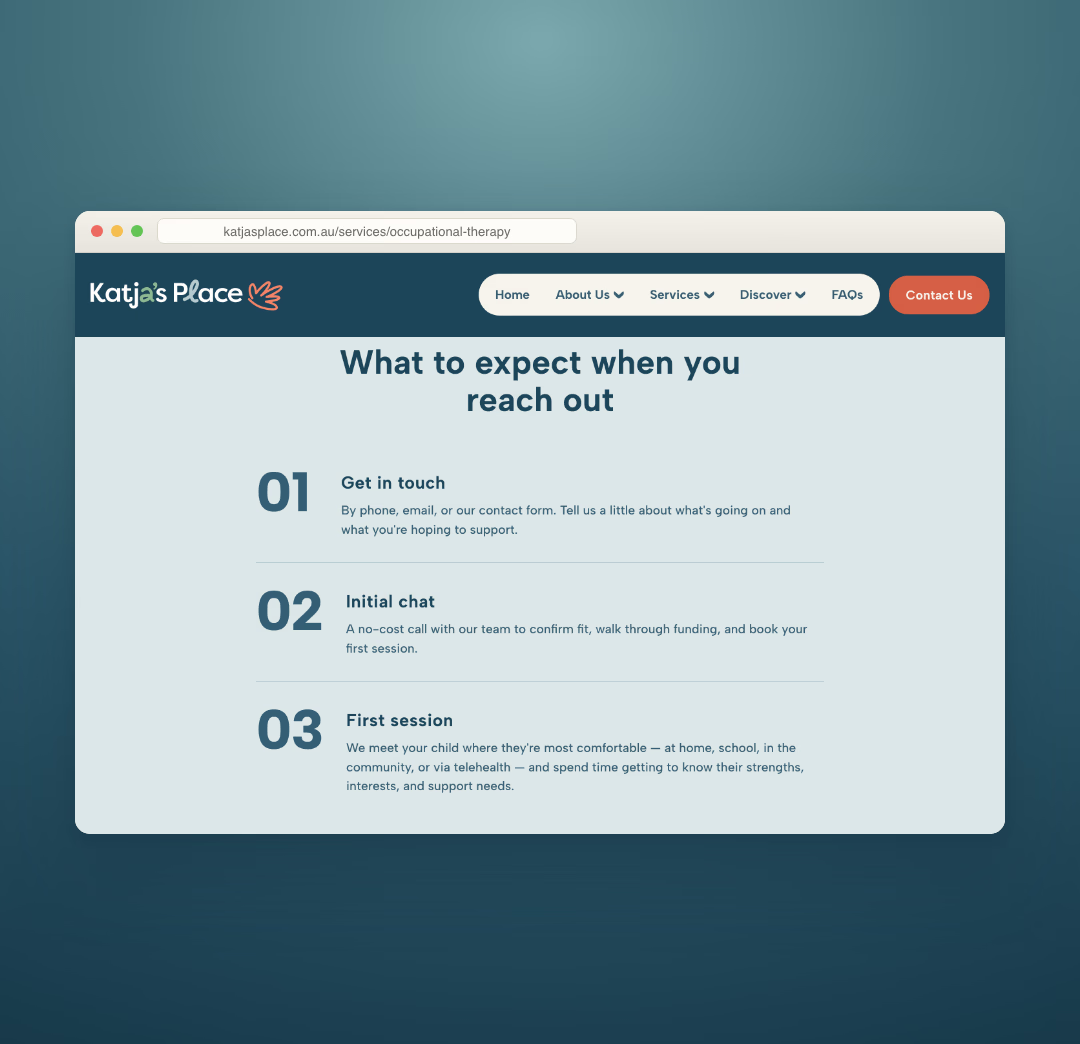
Most clinic websites answer this with a wall of clinical language, which is exactly the tone that makes an already anxious parent close the tab. The site had to be warm without being vague, and thorough without being exhausting.
There was a practical constraint too. Group programs and holiday camps change every term. Seminars get scheduled and filled. If keeping those current needed a developer, they would go stale within a month.
The Solution
We built the site around the question a parent is actually asking: is this for my child?
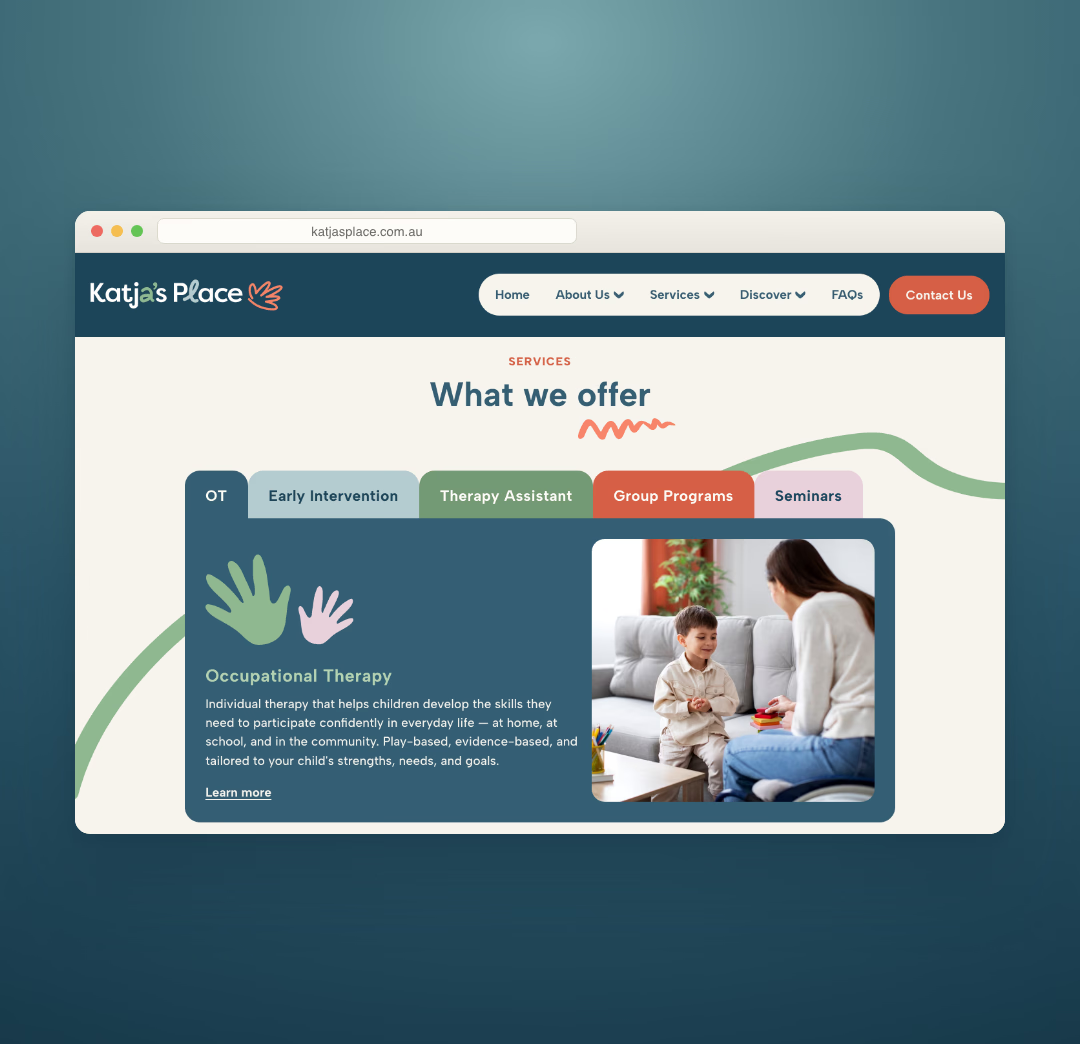
Every service says who it is for, in plain words, immediately under what it is. Occupational therapy, early intervention, therapy assistants, group programs, seminars and specialist programs each get that treatment, so a parent can rule themselves in or out in a sentence rather than reading a brochure.
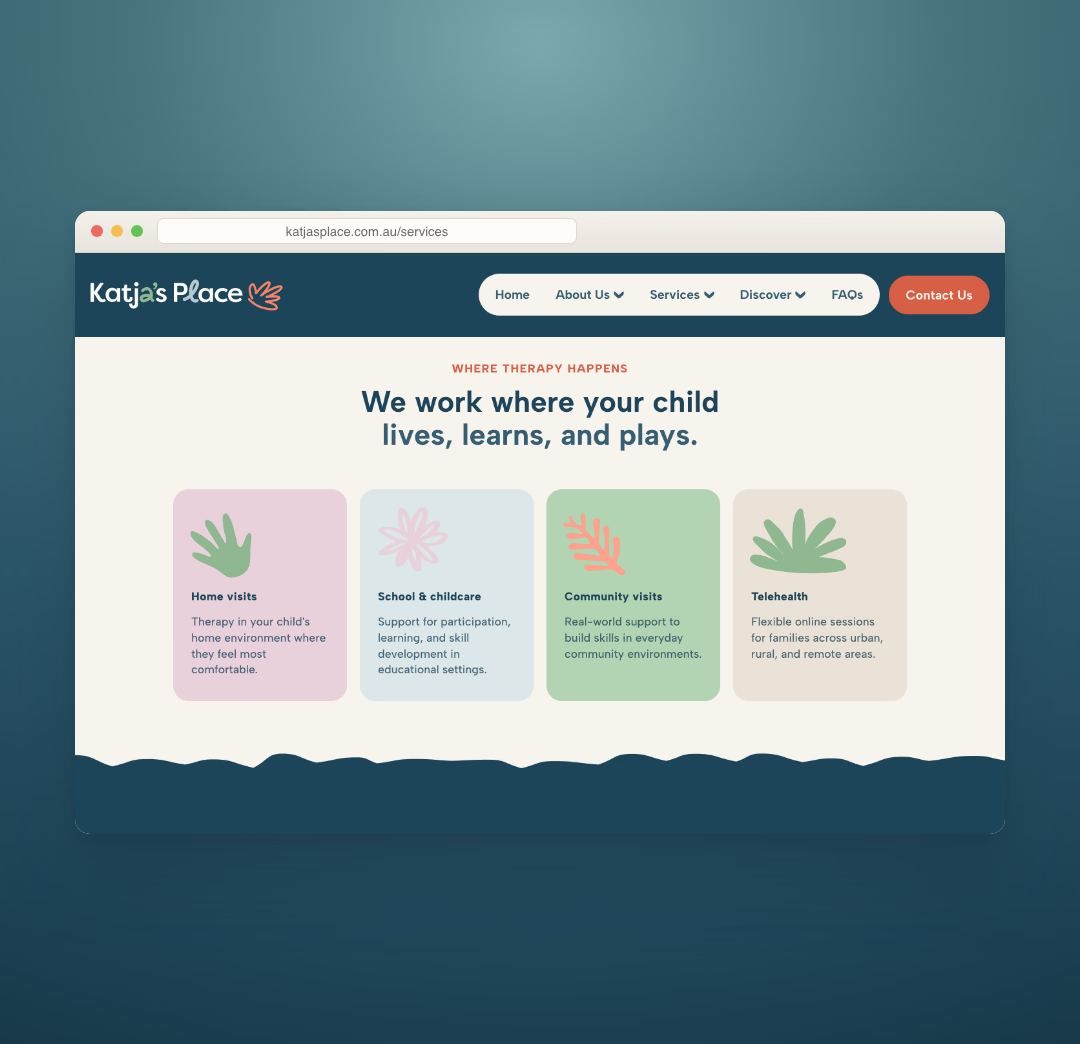
Where therapy happens got its own section, because it is genuinely unusual. Katja's team works in the child's own environments: home, school and childcare, the community. That is a clinical position, not a logistics note. Skills practised where they are used transfer better. The site says so.
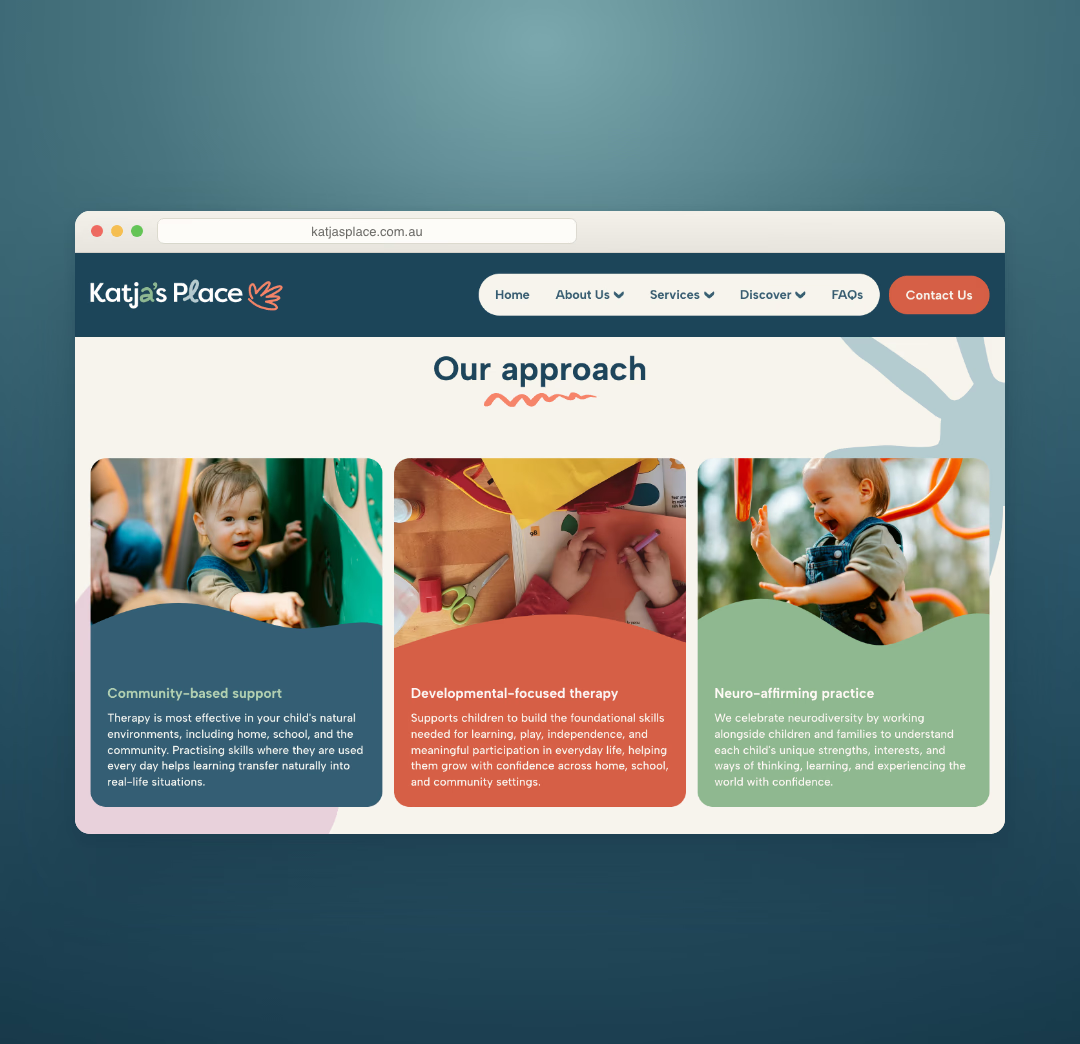
The visual language stays soft. Botanical motifs, scalloped edges, a denim and pastel palette, real photography of children mid-activity rather than stock. It reads as a place, not a clinic.
Behind it, Payload runs the content. The team adds a holiday program or a seminar the same week they schedule it, with no developer in the loop.
Built to Keep Running
A small practice cannot absorb downtime or a surprise hosting bill. The infrastructure work here was as much a part of the brief as the design.
One Application, One Deploy
The public site, the Payload admin and the API all ship as a single Next.js app on Vercel. Migrations run before the build, and a failed migration keeps the previous deployment serving rather than taking the site down, which is the behaviour you want when nobody is watching the deploy at 9pm.
Content is cached and revalidated by tag, so an editor's change appears without a rebuild. The data layer deliberately fails open: if a fetch errors, the last good page keeps serving rather than rendering an empty section. A therapy practice showing a blank services page is worse than showing slightly stale content.
Knowing Before the Client Does
Errors alert our own Slack, not an inbox nobody checks. A health endpoint is polled on a schedule, and the database is backed up weekly on a retained schedule.
None of that is visible on the site, and that is the point. A practice this size should not be the first to notice its own website is down.