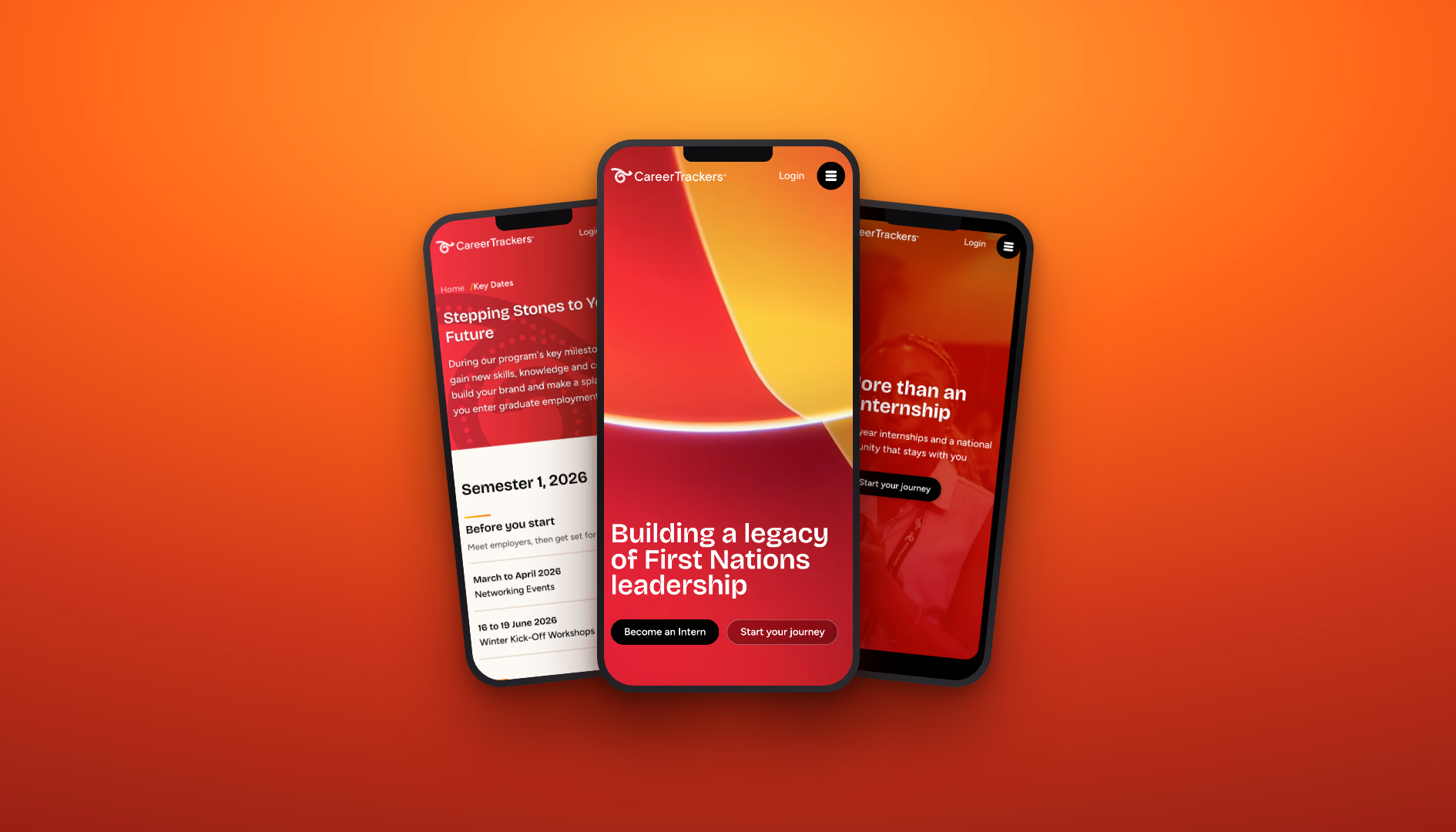
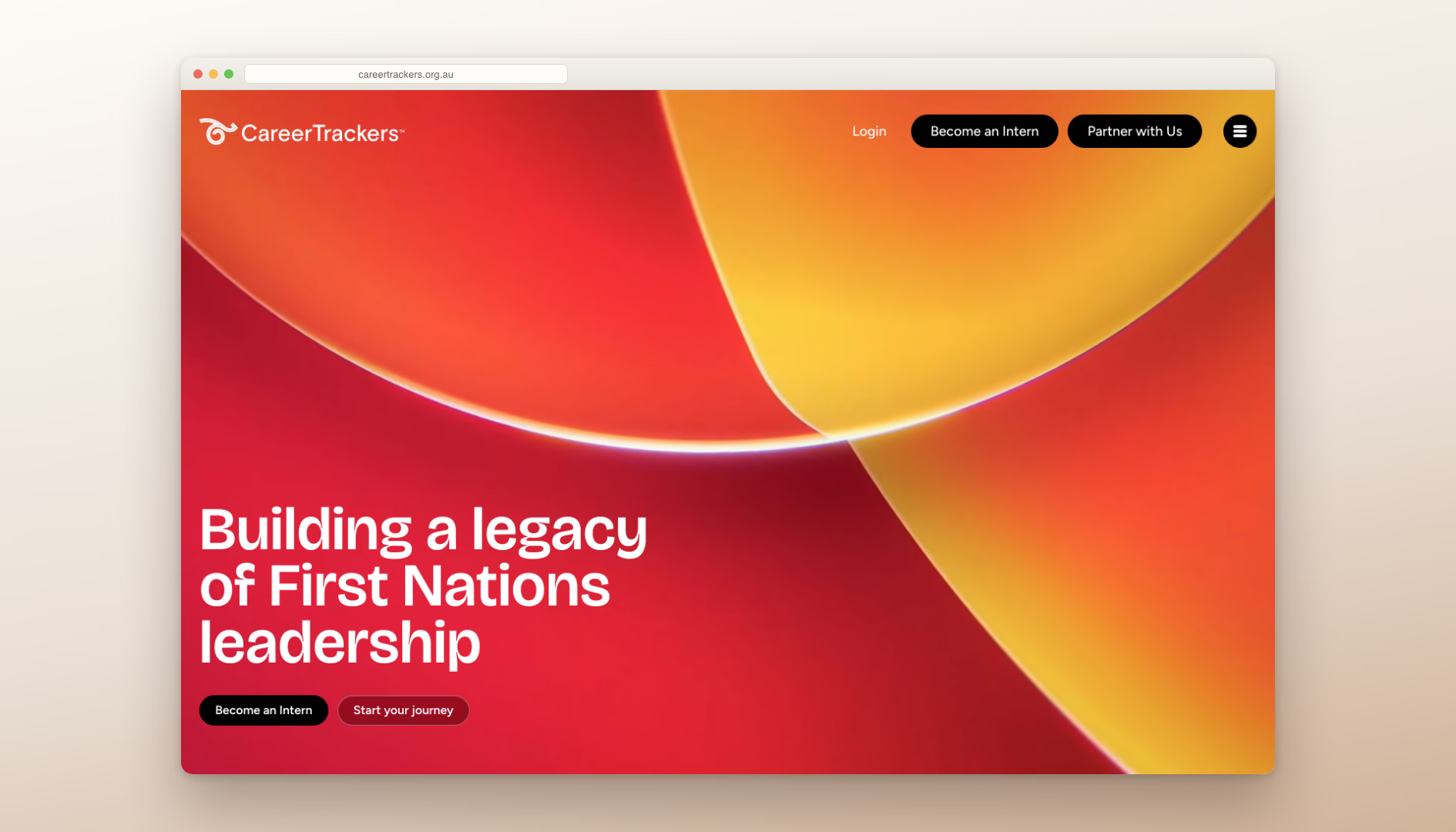
A full rebuild for Australia's largest First Nations internship program, moving a decade of content off a crash-prone WordPress server onto a site the comms team can finally run themselves.
View live →- 48 → 24Legacy pages audited, de-duplicated and rebuilt as designed pages
- 30Old WordPress URLs mapped to redirects, so search rankings carried over
- One appPublic site, CMS and API in a single deploy the comms team controls
The Challenge
CareerTrackers places First Nations university students into paid, multi-year internships. Forty staff, hundreds of students, some of the biggest employers in the country. The website holding all of that together was a Bitnami WordPress box on Google Cloud that fell over regularly, and nobody in the building knew how to fix it.
The comms team had given up trying. Every content change went through someone else, so pages went stale and events passed with the dates still wrong. When the server crashed, the site was simply gone until somebody with server access noticed.
The audit found 48 unique live pages once duplicates were stripped out. Some carried real search traffic: the paid internship page was the second-highest organic entry point on the whole site, and losing its ranking in a rebuild would have cost the program actual applicants.
This is a nonprofit. The budget was what it was, and the answer had to be something two people could maintain without a retainer.
The Solution
We rebuilt it as one Next.js application. Public site, Payload CMS and the API all deploy together, so there is no separate server to keep alive and nothing to patch on a Tuesday morning.
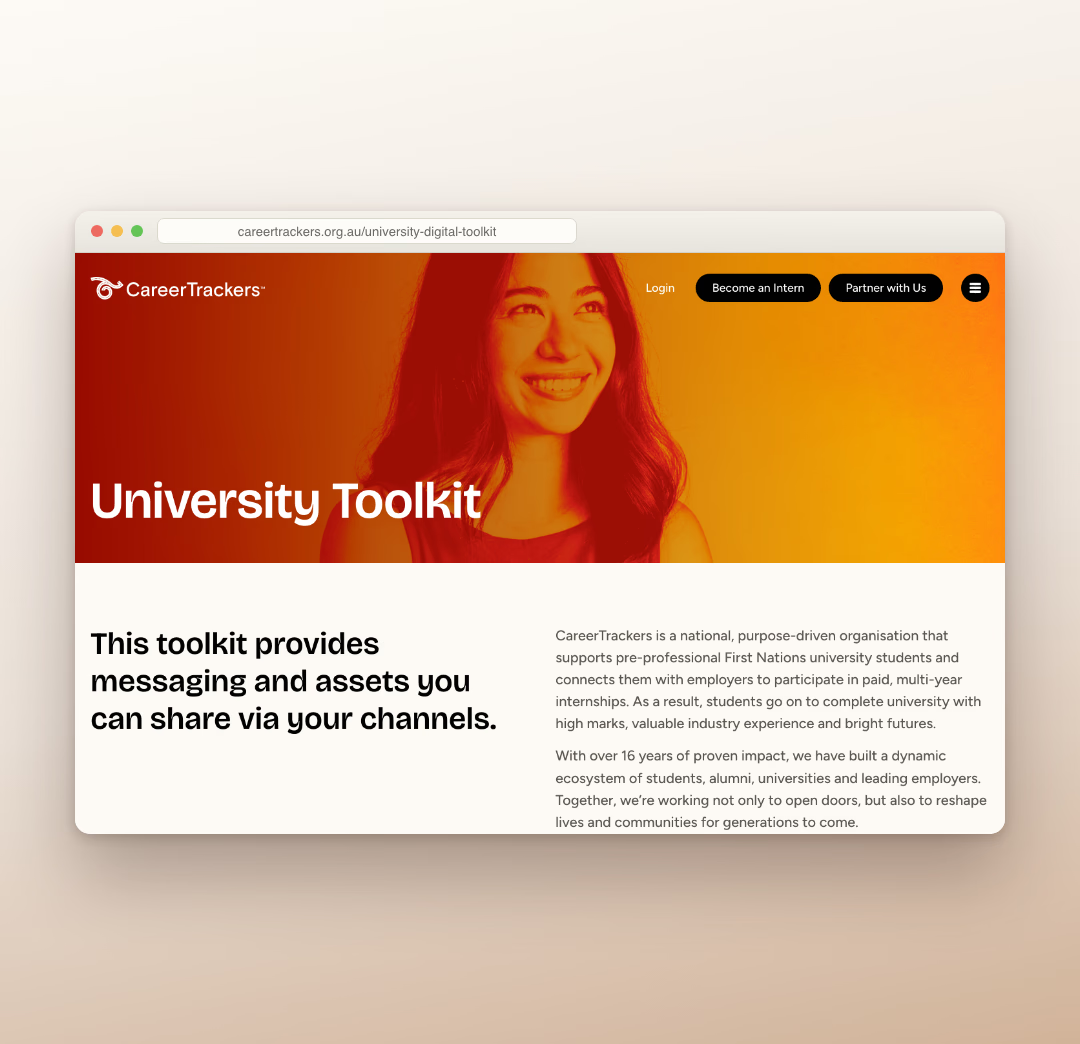
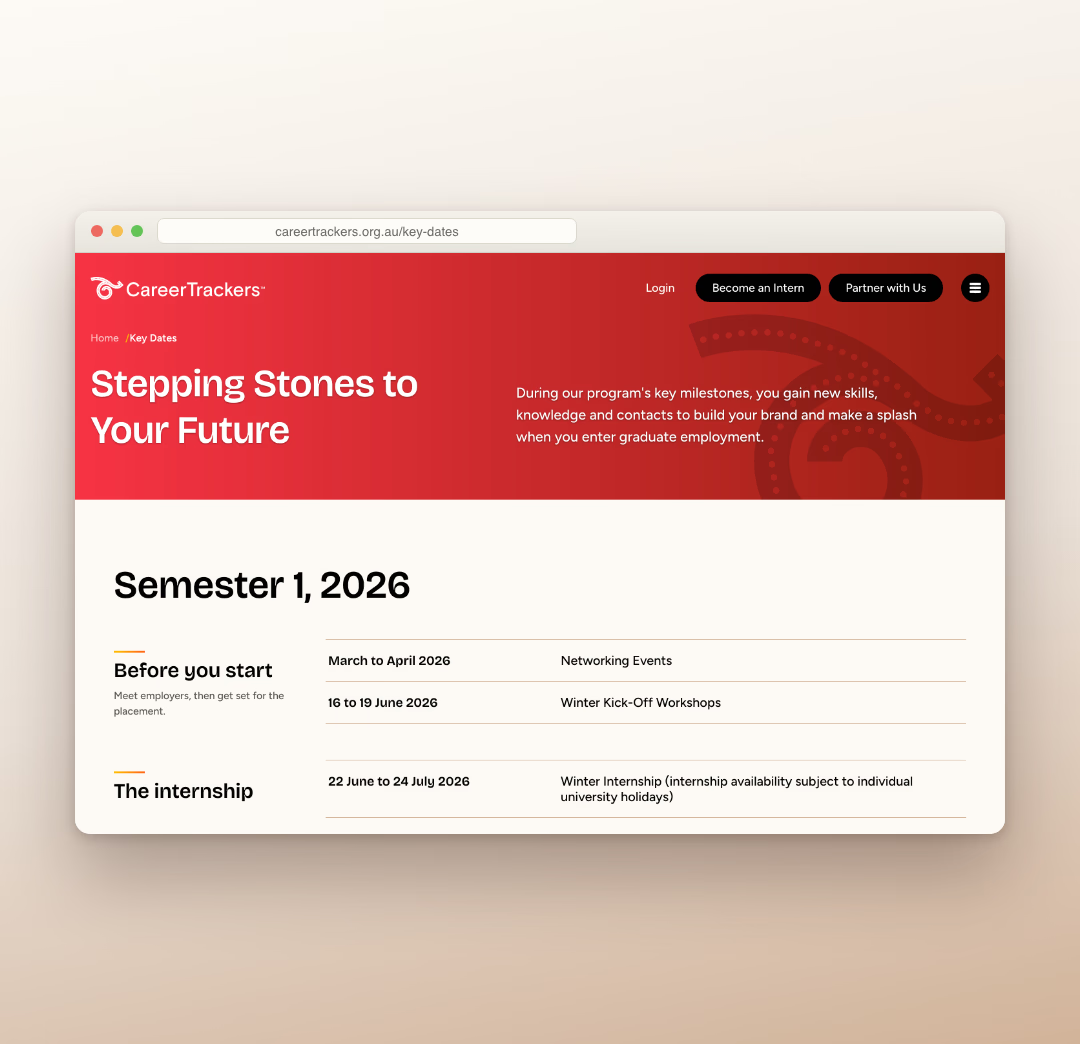
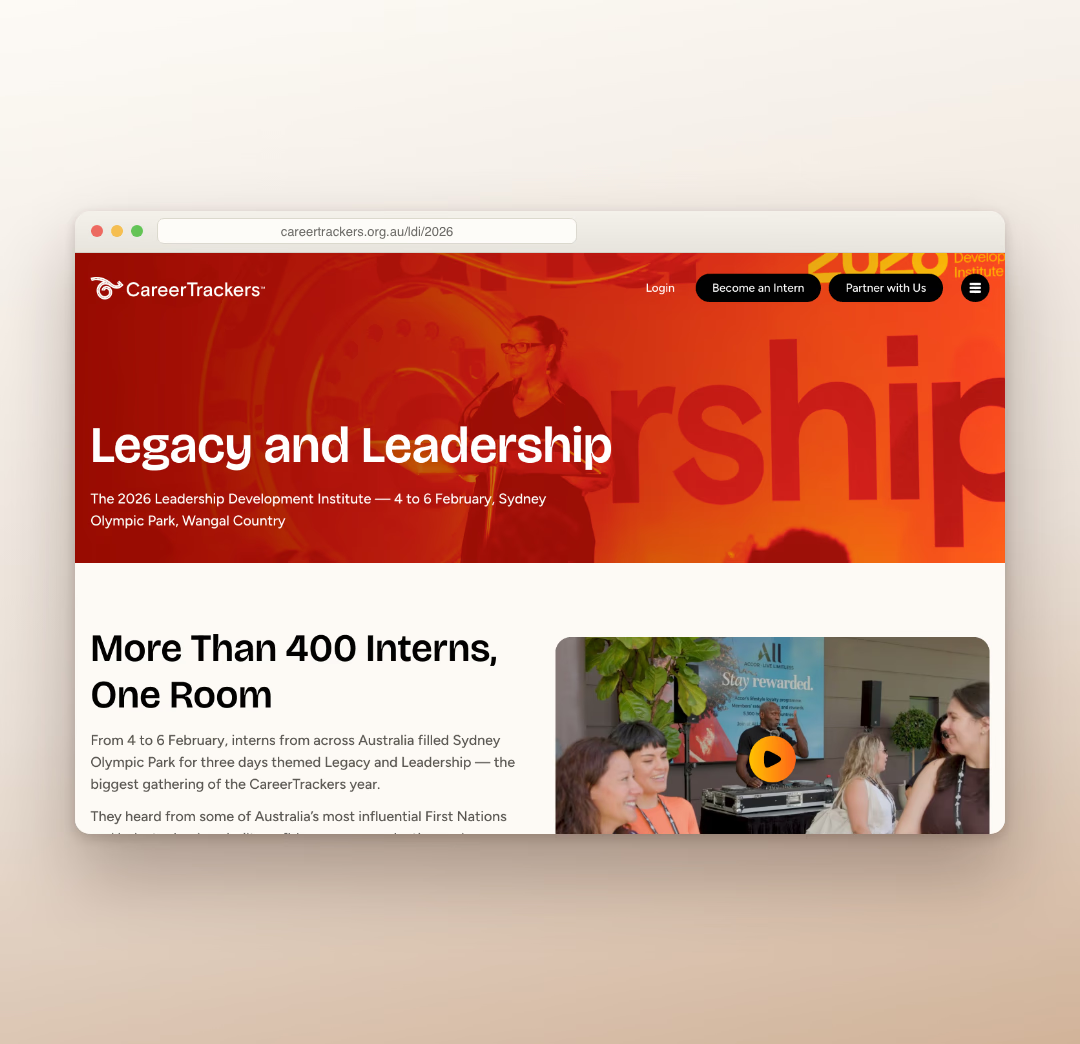
The designed pages are real pages. Each one is a static route rendering structured content, not blocks dragged around in a page builder, which is why the internship pages, the university toolkit and the key dates tables all hold their shape no matter who edits them. Editors change words and images. They cannot accidentally dismantle a layout.
The 48 legacy pages became 24. Most of the loss was duplication: three routes explaining the same program, two registration forms, a decade of one-off campaign pages nobody had deleted. Thirty old URLs are mapped to their nearest equivalent so the search equity follows, and the dead ends with no successor are left to 404 deliberately rather than dumped on the homepage.
Underneath: Postgres on Neon, media on R2, forms wired to the team's own spreadsheets and inboxes so enquiries land where people already work. The whole thing runs in Sydney, which matters when almost every visitor is Australian.
Rebuilding Without Losing the Audience
A rebuild is the easiest way to lose the traffic you already have. Three decisions kept it: an honest audit, a deliberate redirect map, and a content model editors cannot break.
The Audit Came First
You cannot rebuild what you have not counted. The old site reported far more pages than it really had: the same content served under several URLs, tag archives, orphaned drafts, campaign pages from years past.
De-duplicating brought it to 48 pages that genuinely existed and were genuinely reachable. Overlaying traffic on top changed the plan: the homepage dominated, but the paid internship page was the second strongest organic entry point, which made it a page to design carefully rather than fold into a generic services section.
Redirects Are a Design Decision
Thirty old paths are mapped to their nearest equivalent on the new site. Several collapse onto one new page, because that is the honest answer when three pages were saying the same thing.
The pages we did not redirect matter just as much. Expired surveys, one-off event forms, WordPress debris. Sending those to the homepage would inflate the numbers and frustrate anyone following an old link expecting something specific. They 404, on purpose.
Content the Team Can Actually Own
The brief that mattered most was not visual. It was that the comms team had been locked out of their own website and had stopped trying.
Curated pages render structured fields rather than free-form blocks. An editor updating the key dates table fills in dates. An editor updating a program page changes the copy and the image. Neither can produce a broken layout, which is what makes people brave enough to edit in the first place.
The flexible page collection still exists for the occasional one-off, but it is deliberately the exception. Every designed page on the site is a route we control.